Eastern white pelican(Pelecanus onocrotalus / Eastern white pelican)
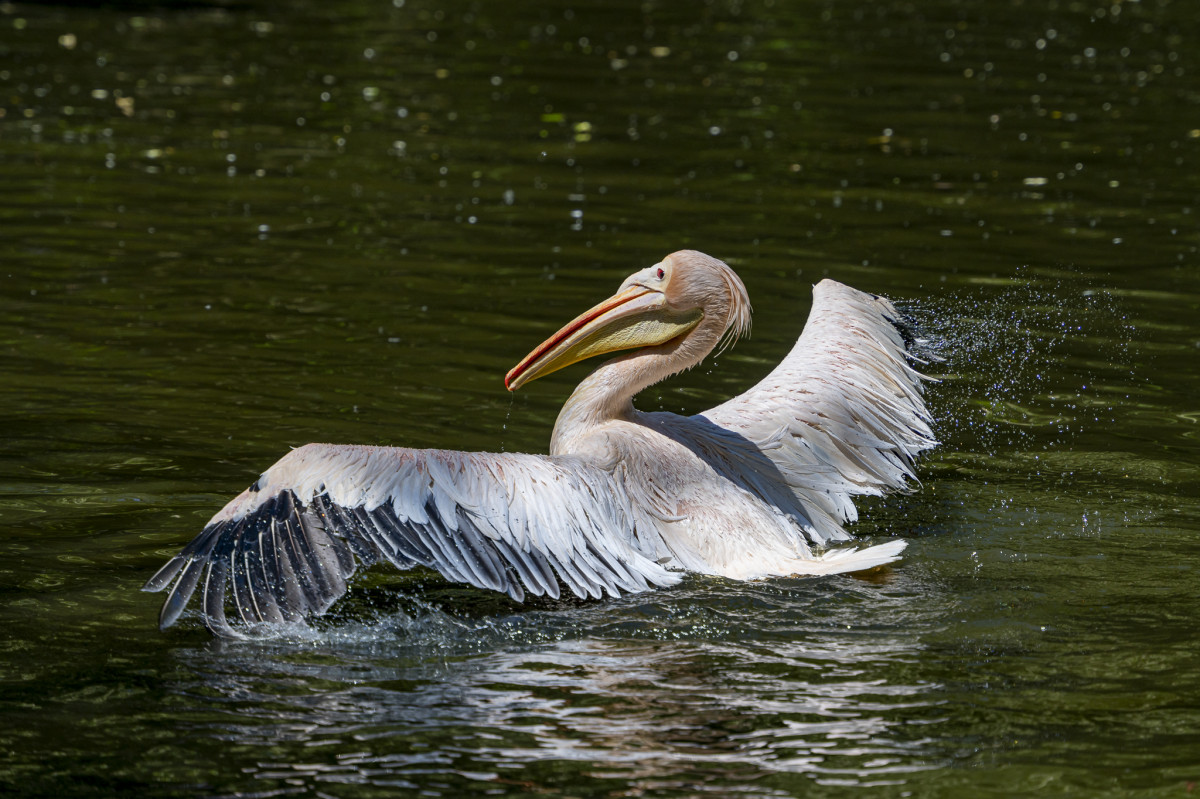
Eastern white pelican

Staňte sa členom našej rodiny
Naše zvieratá si môžete adoptovať a prispieť na ich kŕmenie, enrichment, rozvoj ich prostredia a ZOO.
Adoptovať
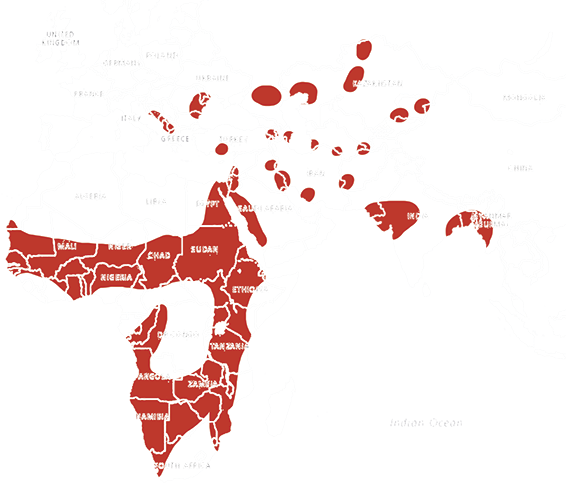
Location Eastern white pelican

Eastern white pelicans are large water birds inhabiting areas of sub-Saharan Africa and zones between southwestern Europe and central Asia. 

Eastern white pelicans form monogamous, long-term pairs. 

Their bird nesting season takes place during spring, and for the nesting to be deemed successful a minimum of 4 stable pairs is required. They nest in flocks usually in the vicinity of shallow lakes and swamps. They build a nest in the form of a tangle of branches and vegetation on the ground and usually lay 2 white eggs in it. Chicks first receive crushed food from the throat pouches of their parents, and after about two weeks they begin to feed themselves on their own. A young pelican consumes up to 75 kilograms of fish during its development, but it does not reach maturity until its 3rd year of life. 

Basic Information
Order
Pelecaniformes
Family
Pelecanidae
Body Length
148 – 175 cm
Wingspan
245 – 295 cm
Weight
female around 5,4 kg, male up to 15 kg (in general 5 – 9 kg)
Lifespans
up to 50 years in captivity
Incubation Period
29 – 36 days
Number of Egg
1 – 3
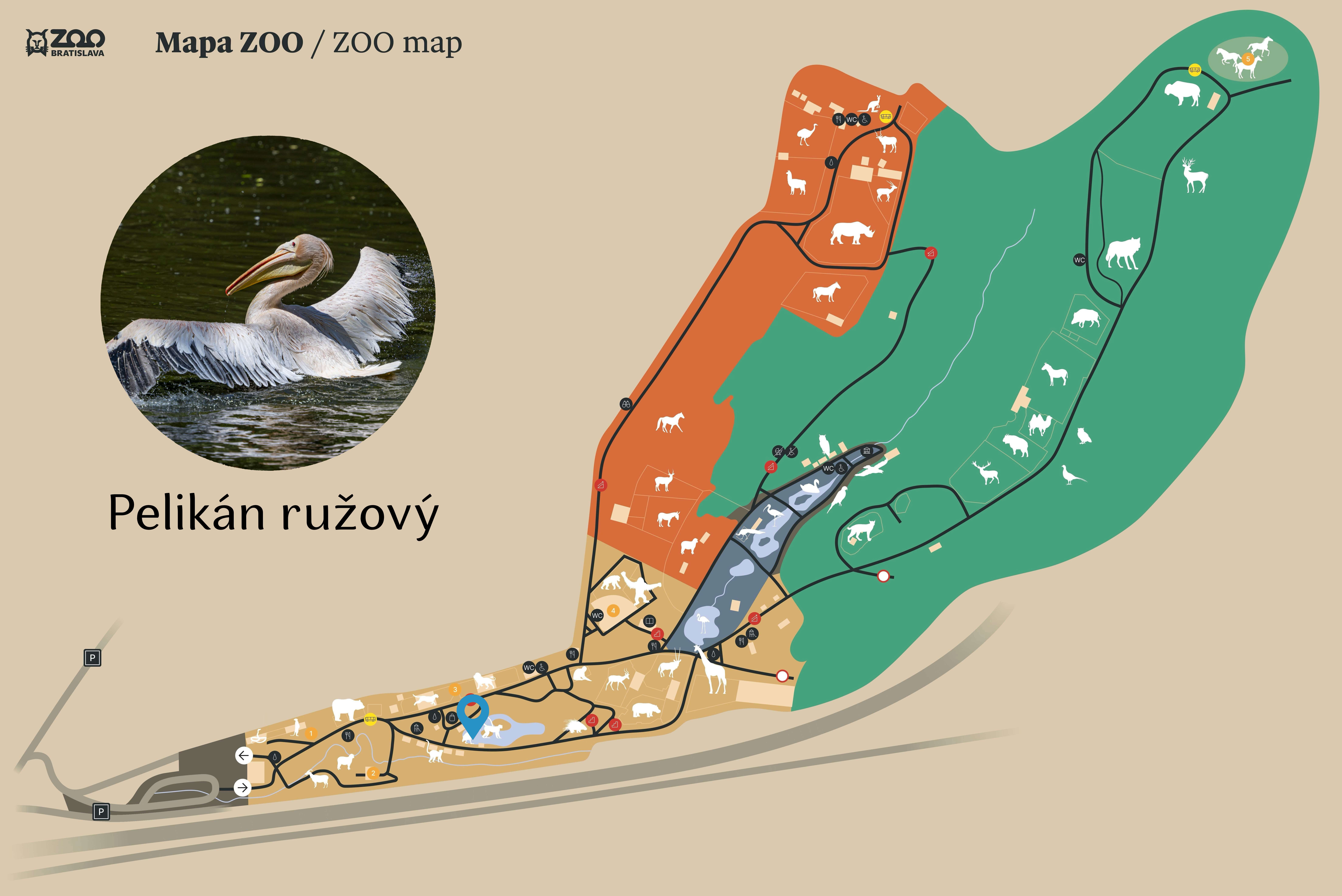
ZOO Eastern white pelican Exhibition
Habitat

rivers, lakes, swamps and coastlines

Diet

mainly fish, but also amphibians, reptiles and small mammals

Life

form long-term pairs, large colonies during nesting

  • Do You Know...

    Swimming pelicans can herd fish to the shallows with strong beats of their wings, where then they can catch them more easily. 

    Their wingspan can stretch to 3 metres. 

  • Do You Know...

    The lower jaw of pelican’s bill is composed of two thin, relatively flexible branches connected at the tip between which is a wide, expandable leather pouch, capable of holding up to 13 liters of water and more than 4 kg of fish. 

  • Do You Know...

    The forehead protuberance enlarges during the mating season and signals readiness for mating. After laying eggs and during brooding, the protuberance usually rapidly reduces its size. Scientists suppose, that this protuberance plays an important role in partner selection. 

  • Do You Know...

    Male and female are very similar in their appearance. Female is smaller and during the mating season has brighter orange skin on the face. 

    In our zoo the females have a significantly bigger protuberance.