Emu(Dromaius novaehollandiae / Emu)

Emu

Staňte sa členom našej rodiny
Naše zvieratá si môžete adoptovať a prispieť na ich kŕmenie, enrichment, rozvoj ich prostredia a ZOO.

Adoptovať
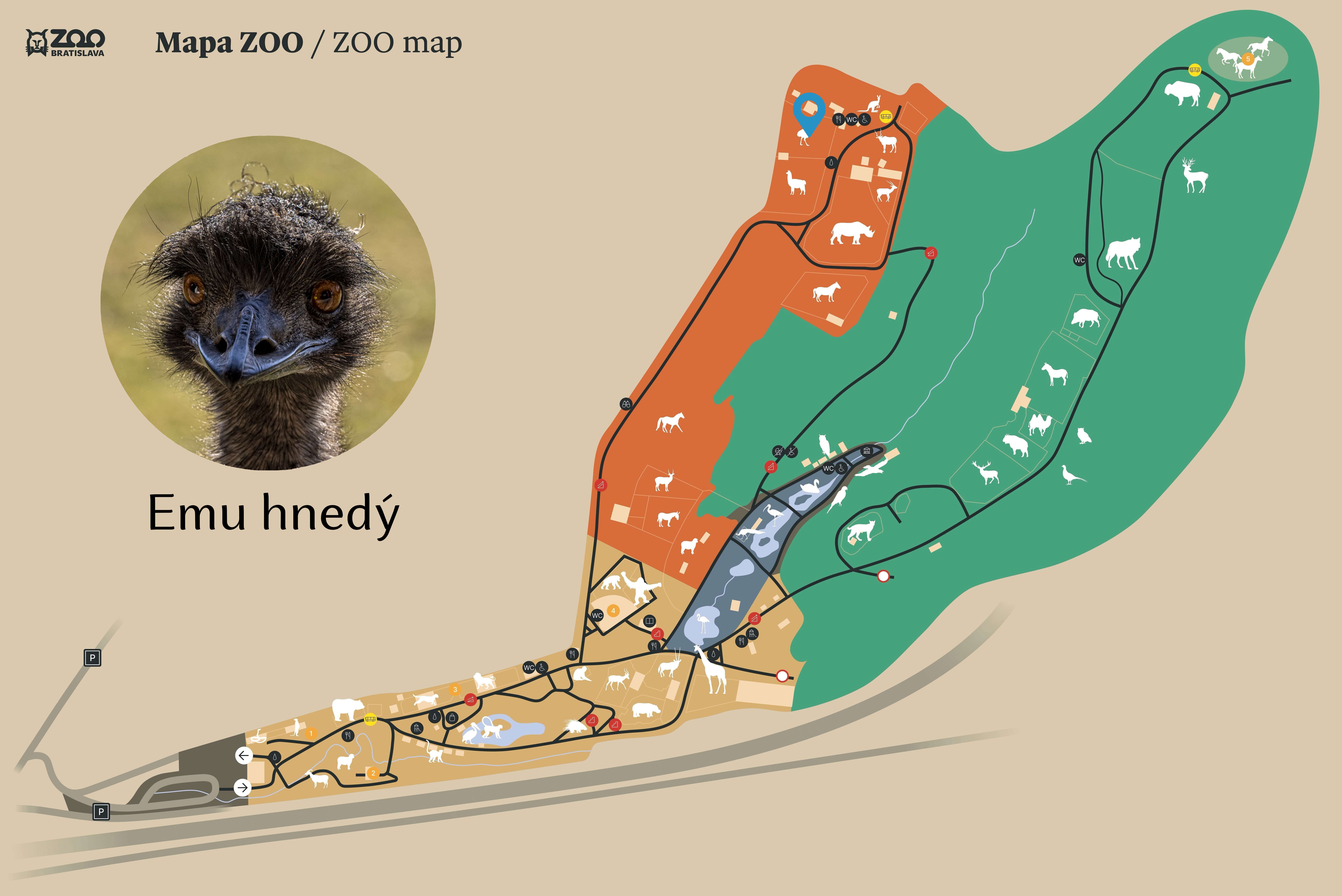
Location Emu

The emu, a flightless bird native to Australia, is the second largest living bird. Emus' feet are designed similarly to other running birds, with long bare legs and three forward-facing toes. Emus have calf muscles, making them more suited to sprinting and long-distance running. Both sexes are brownish, with a dark grey head and long whitish-blue neck. Their heads are coated in wispy feathers and have a wide black beak adapted to grazing. Emus have little vestigial wings that can flap but do not aid in movement. 

Basic Information
Order
Struthioniformes
Family
Dromaiidae
Weight
36 – 40 kg
Lifespans
7 years in the wild, 16 years in captivity
Incubation Period
48 – 56 days
Number of Offsprings
5 – 24 eggs 
Predator
eagle, dingo
ZOO Emu Exhibition
Habitat

dessert, forest, savannah, grassland

Diet

grass, bark, stems, seeds, nuts, fruit

Life

diurnal, solitary except nesting season – sharing nests

  • Do You Know...

    Emus' muscular legs allow them to travel at rates of up to 50 km/h with an average stride of 3 metres. These legs' great strength enables them to perform extremely powerful kicks that can maim predators.

  • Do You Know...

    Emus' muscular legs allow them to travel at rates of up to 50 km/h with an average stride of 3 metres. These legs' great strength enables them to perform extremely powerful kicks that can maim predators.

  • Do You Know...

    Female emus have little interaction with their eggs once they have laid them. Male emus are defensive of all other emus and take great care to defend their nest. Male emus choose a suitable spot for their mate's eggs and create a bed of dead grass and vegetation surrounded by larger bushes. Males protect the flock after hatching.

Adoptívni rodičia

Tinka

Ďakujeme za pomoc a podporu