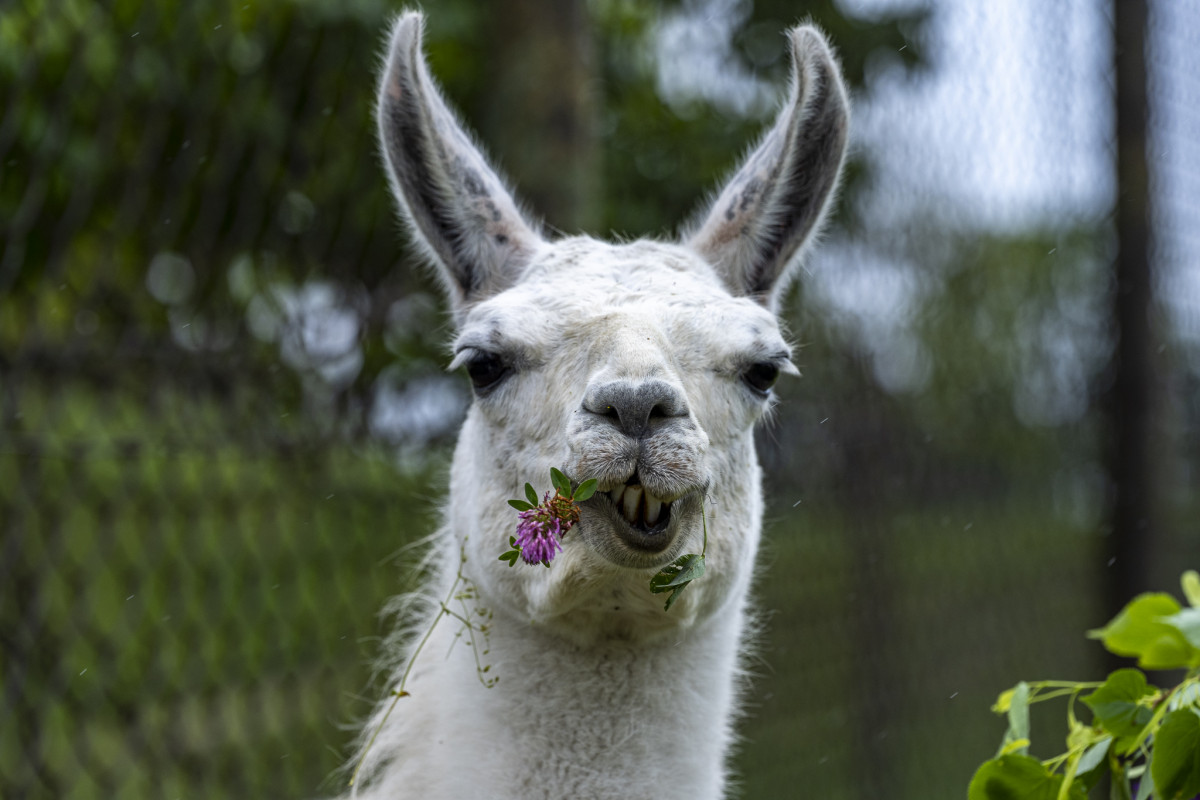
Llama(Lama glama / Llama)

Llama

Staňte sa členom našej rodiny
Naše zvieratá si môžete adoptovať a prispieť na ich kŕmenie, enrichment, rozvoj ich prostredia a ZOO.

Adoptovať
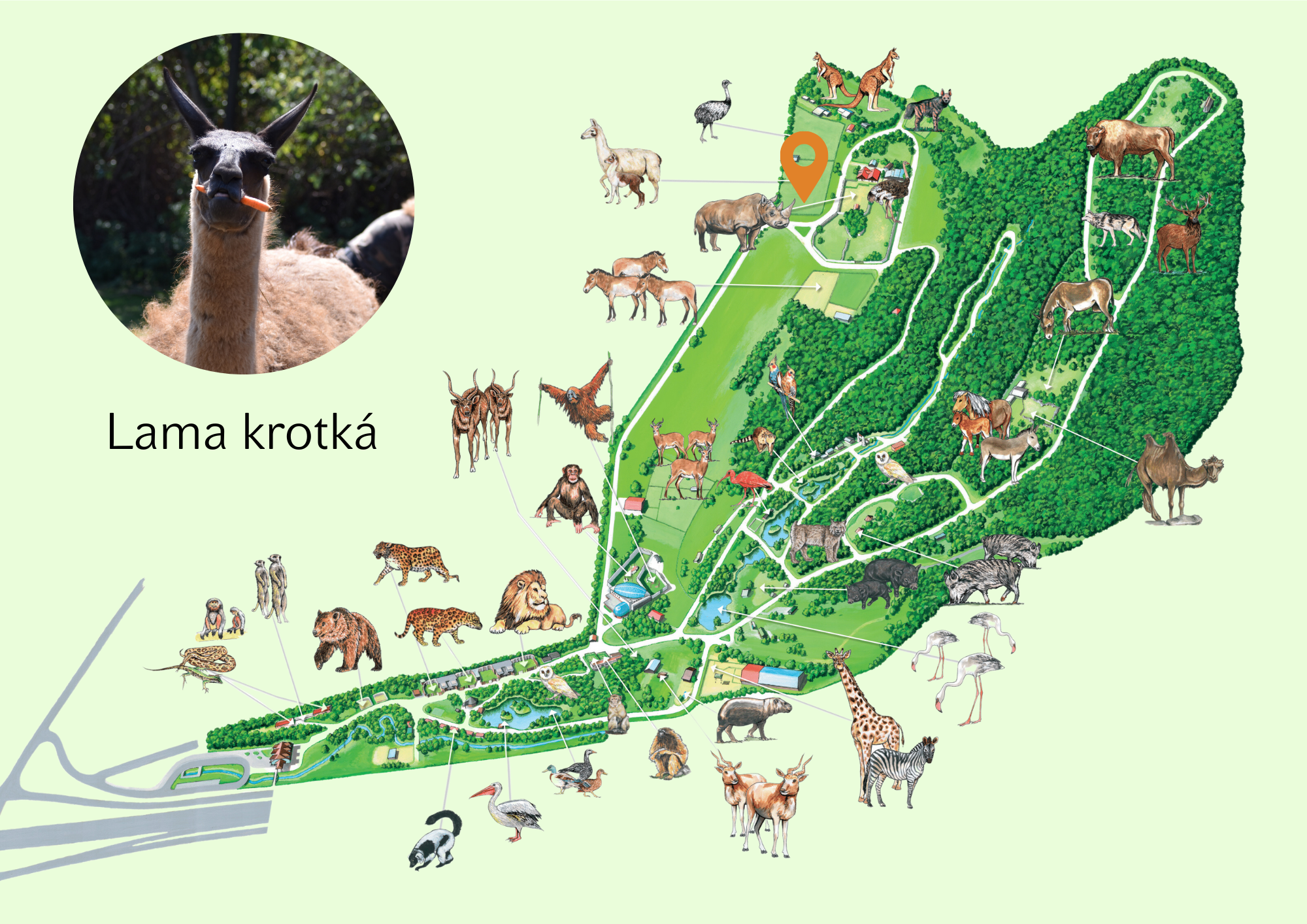
Location Llama

Llamas, like all camelids, have long necks and limbs, rounded muzzles, protruding lower incisors, and a cleft upper lip. They have long shaggy coats that vary greatly in color. A typical coat pattern is reddish brown fur with mottled patches of white or yellow. Llamas are the domesticated forms of the wild guanaco (Lama guanicoe). There are two types of domesticated llamas: the Qara type, which is hairless with a bare face, and the Chaku type, which has long, thick wool. 

Basic Information
Order
Artiodactyla
Family
Camelidae
Body Length
92 – 160 cm
Height
121 cm
Weight
130 – 200 kg
Lifespans
10 – 20 years in captivity
Gestation Period
350 – 360 days
Number of Offsprings
1
Predator
raptors
ZOO Llama Exhibition
Habitat

Diet

grass, leaves, roots, seeds, grains

Life

diurnal; social – herd of 20 members consists of one dominant male and many females with young

  • Do You Know...

    Farmers have used llamas to reduce sheep predation by canids. Studies show that incorporating a few llamas into sheep or goat flocks significantly reduces predation. Because of their ability to carry burdens weighing more than 60 kg for up to 30 km, llamas were traditionally used to haul loads across the Andes.

  • Do You Know...

    Llamas have an unusually high hemoglobin content in their bloodstream and oval-shaped red blood corpuscles, both of which are adaptations for survival in an oxygen-depleted, high-altitude environment.

Adoptívni rodičia

Kajka, Livi, Tamka a Tady Advokátska kancelária RELEVANS s. r. o.

Ďakujeme za pomoc a podporu