
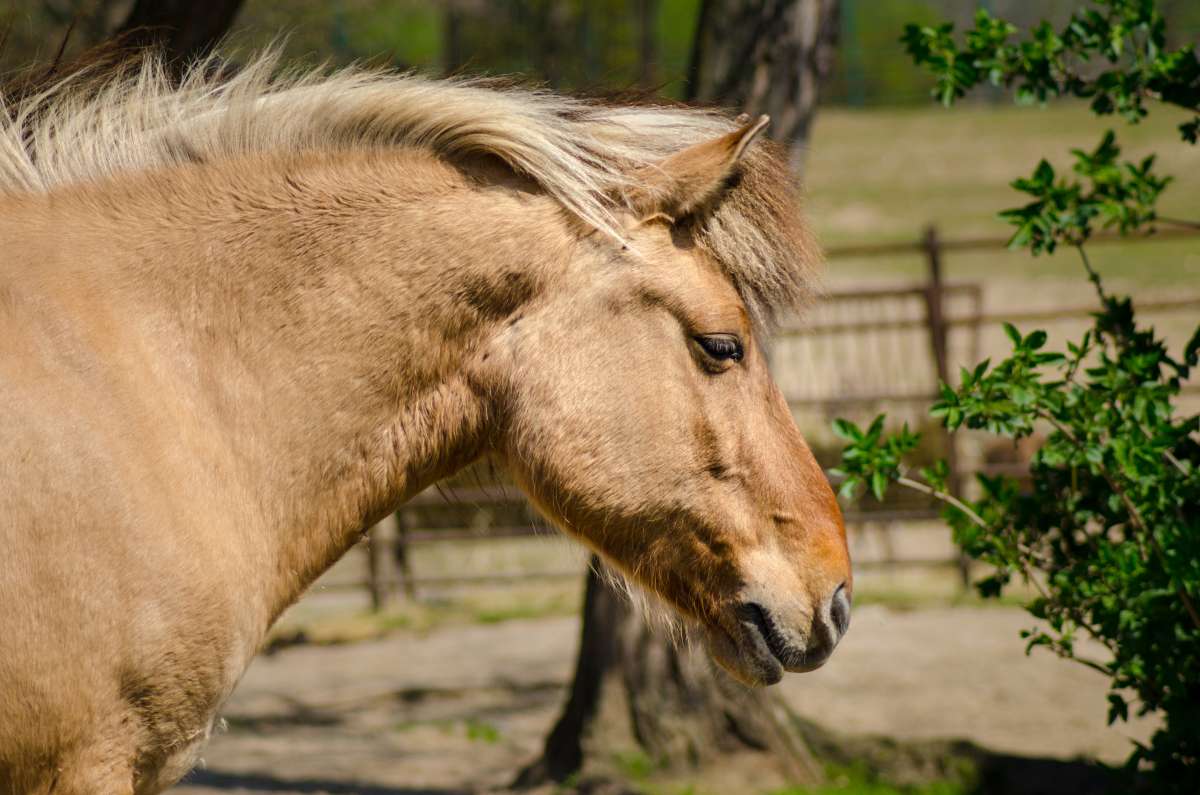
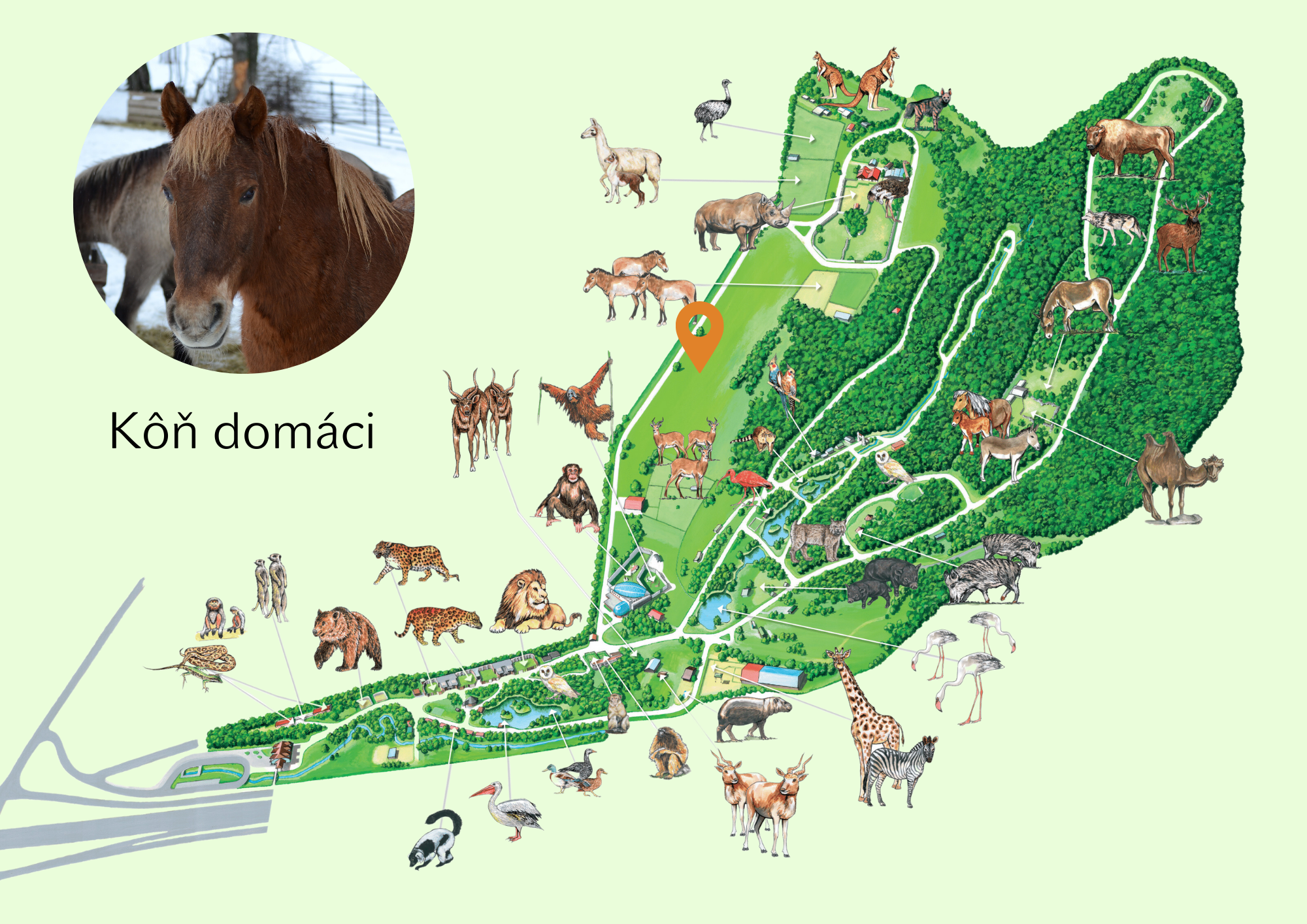
Domestic horse(Equus caballus / Domestic horse)
Staňte sa členom našej rodiny
Naše zvieratá si môžete adoptovať a prispieť na ich kŕmenie, enrichment, rozvoj ich prostredia a ZOO.

The evolutionary path of horses led to adaptations to life in drier and rougher terrain. As environmental conditions changed, horses evolved from five-toed mammals the size of foxes to the current form and structure of the horse's body. Although the ancestors of horses were multi-toed, odd-toed ungulates, today's domestic horse is single-toed. The domestication of horses has resulted in a wide range of breed characteristics. Coats come in a variety of colors, from white to black, including shades of red, brown, and yellow, as well as a wide range of patterns, such as spots and patches. Horses have long been regarded as symbols of nobility and majesty, thanks to their long, slender limbs, deep muscular torso, strong neck, and thick mane.
Basic Information
countryside
grass, leaves, bark, stems, grains, fruit
social, the herd is led by dominant stallion with dominant mare